Health & Safety Policy for Office Clearance Staines
 Policy statement: This health and safety policy sets out the commitments of the office clearance operation to protect employees, contractors, clients and the public while delivering professional office clearance, commercial rubbish removal and related clearance services. The policy applies to all activities carried out by the clearance company on customer premises and during transport and disposal of waste. The organisation recognises that effective safety management is an essential element of quality service delivery and environmental responsibility.
Aim and scope: The objective is to reduce risk to as low as reasonably practicable by identifying hazards, implementing controls and maintaining records. This document covers routine and non-routine operations associated with office and commercial waste removal, including sorting, lifting, loading, transportation and secure disposal. The policy extends to subcontractors engaged for specialist clearance work and for temporary labour assisting in site clearances.
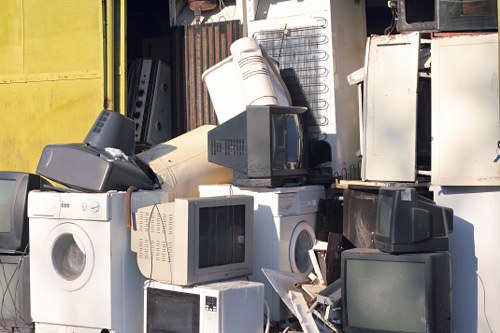 Responsible management will ensure that risk assessments are undertaken and kept current for typical clearance scenarios, and that measures are in place to manage foreseeable risks such as manual handling, slips, trips and falls, falling objects, exposure to hazardous materials and traffic movements during rubbish removal operations. A structured approach to safety will be maintained through regular inspections, pre-job briefings and documented method statements where required. The organisation fosters a culture in which safety concerns can be raised and addressed promptly.
Responsibilities and roles
Management is responsible for providing leadership on health & safety, allocating resources, ensuring safe systems of work and monitoring performance. Supervisors and team leaders are responsible for ensuring staff understand and follow safe working practices during an office clearance or commercial clearance assignment. Employees and operatives have a duty to take reasonable care for their own safety and that of others, cooperate with policies, use provided protective equipment and report hazards or incidents without delay.
 The company will provide relevant training and information to staff, tailored to their roles in the rubbish clearance process. Training includes awareness of hazardous waste types, manual handling precautions, use of mechanical aids, safe use of vehicles and traffic management, and correct procedures for segregation and containment of materials destined for recycling or disposal. Where specialist wastes are present, trained specialists will be engaged to ensure compliant handling.
Personal protective equipment (PPE) and equipment safety: Suitable PPE such as gloves, high-visibility clothing, eye protection and safety footwear must be worn where risk assessments indicate. Equipment, including lifting aids, trolleys, straps and vehicles, will be inspected and maintained in accordance with manufacturer guidance and statutory requirements. Faulty equipment must be taken out of service and reported immediately.
Operational controls and safe working
Workplaces and client sites will be assessed for specific hazards before clearance begins. Controls include establishing exclusion zones, using signage, implementing traffic management for rubbish removal operations and ensuring access routes are kept clear. Waste handling will be organised to minimise manual lifts and to segregate recyclable materials from general waste to support environmental objectives. The policy recognises the importance of minimising nuisance and potential harm to the public during commercial junk removal activities.
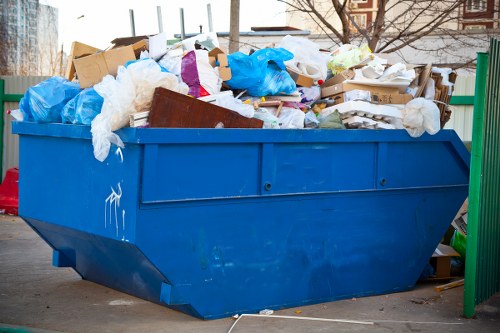 Hazardous materials: Any discovery of hazardous items such as batteries, asbestos-containing materials, sharps or chemical containers will trigger immediate suspension of work in the affected area until a competent approach is established. The policy requires that hazardous materials are not simply handled as general rubbish; instead, they are managed through established, compliant channels that prevent exposure and environmental release. Records of identified hazardous waste will be maintained.
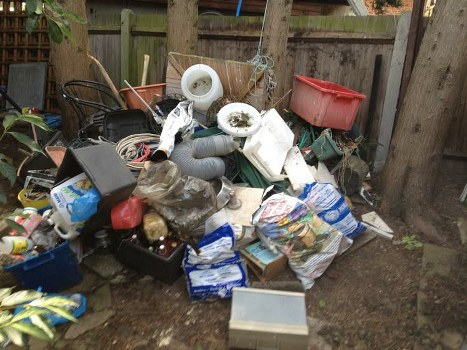 Incident reporting and emergency response: All incidents, near misses and injuries occurring during rubbish clearance or related activities must be reported and recorded. The organisation will investigate incidents to identify root causes and implement corrective actions. Emergency procedures, including first aid provision and access to medical assistance, are part of operational planning and must be communicated to all staff prior to commencement of work.
Monitoring, audit and continuous improvement: The company will conduct periodic audits and site inspections to ensure compliance with this health and safety policy. Performance indicators will include incident rates, audit findings, completion of training and corrective action timeliness. Findings will be reviewed at management level and used to update procedures, training and risk assessments.
Legal and regulatory compliance: While this policy does not list legislative detail, the organisation commits to comply with applicable health, safety and environmental obligations relevant to clearance and rubbish removal operations. Compliance is achieved through regular review of statutory requirements, staff training and consultation with competent advisors when necessary.
Review and consultation: This policy will be reviewed at least annually or following significant incidents, operational changes or changes in legal requirements. Employees will be consulted on health and safety matters and encouraged to contribute to improvements. The policy is supported by documented procedures, risk assessments and records demonstrating the organisation's ongoing commitment to safe, responsible office clearance and waste removal services.
